
A CLOSER LOOK / PRACTICAL GUIDE
The Key Turns, but the Car Door Stays Locked
A closer look at the difference between turning a key, unlocking a door and releasing its latch.
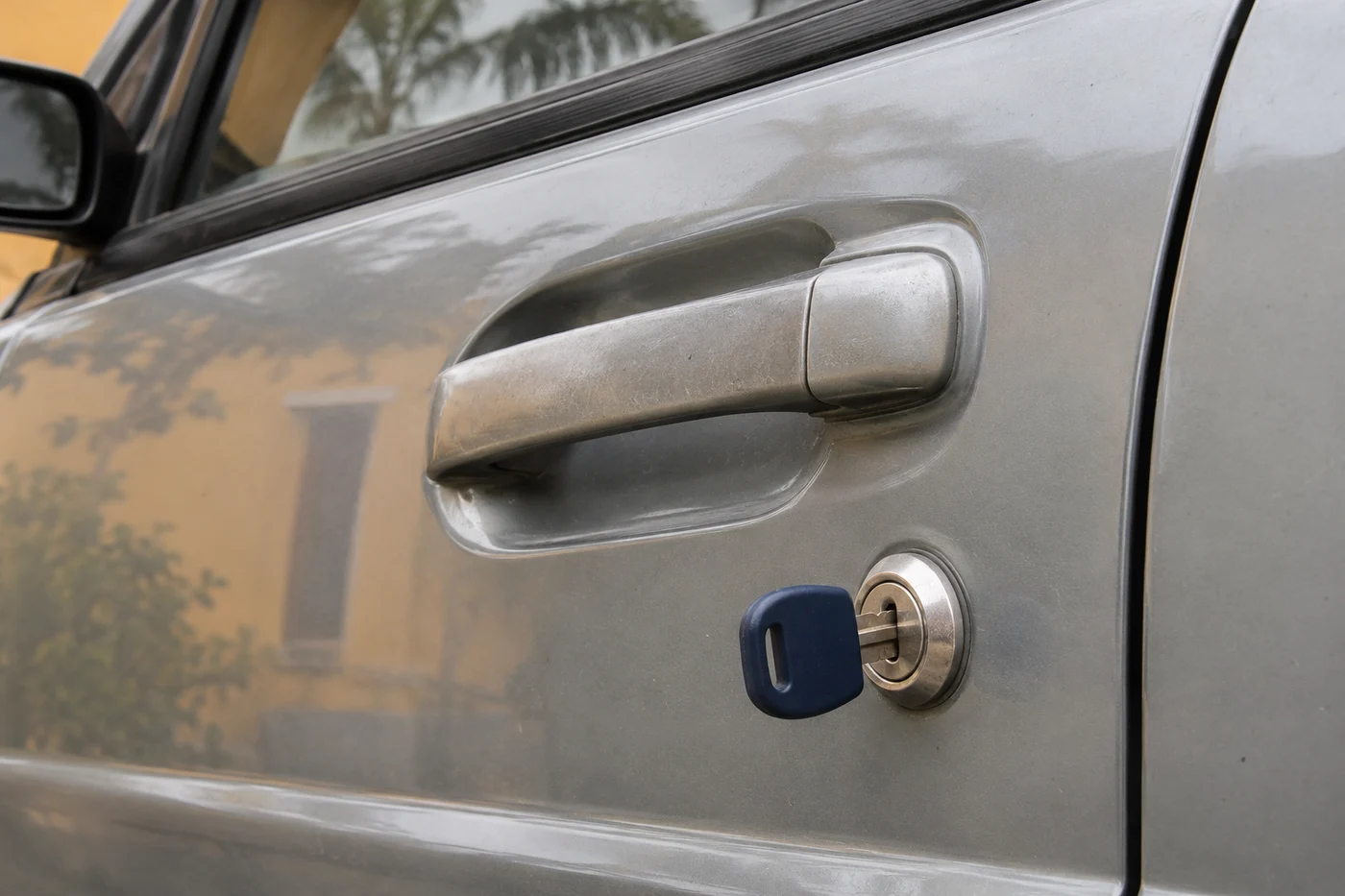
The metal key goes in. You turn it. The door stays shut. It's a frustrating moment, especially if the remote normally does all the work and you haven't tried the blade for a long time.
Start by keeping the actions separate. A key entering a cylinder, rotating it, unlocking the door and allowing the handle to release are related events. They are not proof of one another.
Describe where the sequence stops
A blade that won't enter fully gives a different account from one that enters but resists turning. A key that turns freely while nothing unlocks is different again. If the lock seems to change state but the handle won't release the door, include that observation.
You don't need the correct component name. Explain the ordinary action that failed. Avoid force, repeated wiggling or taking the handle and trim apart to establish a diagnosis.
Keep the remote out of the mechanical diagnosis
The remote buttons, the engine-starting credential and the physical blade may perform different jobs. A car can respond to a remote while its door blade is mismatched or damaged. Replacing a fob battery doesn't automatically repair that mechanical problem.
A manufacturer owner-manual example distinguishes remote and power locking from a mechanical driver-door key. The details are model-specific. This is a reason to use the manual for the actual vehicle, not to copy a turn direction or timing sequence from another model.
A used-car blade may have a different history
Ask whether the door, lock or key was changed before you owned the car, if that history is available. A remote can have been paired successfully while its removable blade was left blank or cut for a different arrangement.
If the backup blade has never been used, don't assume it was supplied ready for the door. A blade can be left uncut or belong to a different lock arrangement. Treat that history as something to check alongside the current fault.
A replacement cylinder is one possible proposal
A faulty cylinder may need work, but a turning key alone doesn't identify the failed part. The handle, latch and related door mechanism may also be relevant. A proper assessment should explain the proposed work and the function it is intended to restore.
If another key works normally, say so. If the car starts with the same key, mention that as a separate observation. Keep the year, make and model with the request, together with known earlier door or key work.
Make the outcome useful
For car locksmith work, be clear whether you need access, a usable mechanical blade, a complete replacement key or assessment of a door fault. Replacement-key information explains the functions to include in that discussion.
At completion, have the agreed functions checked on your vehicle. A successful engine start is not automatically a test of manual door access. In Lynwood, California, call LockReach at 424-789-8122 to discuss the particular vehicle and location.
Questions about this request
If the key turns, is it definitely the right key?
Rotation alone doesn't establish that it operates the door correctly. The key and the actual lock arrangement need assessment.
Can I follow a video for a similar-looking car?
Use the information for your actual model and equipment. Avoid trim removal, forced entry or transferring procedures from another vehicle.
References: Ford/Lincoln owner-manual example: Locking and Unlocking. Reviewed November 10, 2026. Technical examples apply to the identified equipment; local references do not imply affiliation.